Body Lotion Ingredients to Avoid
A calm, priority ranked checklist of body lotion ingredients worth skipping, the names they hide behind on labels, and what to reach for instead.

Key takeaways
- Lotion is mostly water, so it always needs a preservative; the question is which one.
- Synthetic fragrance and formaldehyde releasing preservatives are the two most worthwhile ingredients to skip first.
- Petroleum fillers, cyclic silicones and PEGs are lower priority but easy to avoid once you know their names.
- Read the first five ingredients for what you are mostly buying, and the last five for preservatives and fragrance.
- An anhydrous balm or body oil sidesteps most of this list because it needs no water based preservative.
Body lotion is the product most people use on the most skin, every single day, so it is a sensible place to start reading labels. The good news is that you do not need to memorize a chemistry textbook. A short list of body lotion ingredients to avoid, ranked by how much they matter, will get you most of the way to chemical free body care without worry or guesswork.
This guide is built for the store aisle. It tells you what to skip first, the names each ingredient wears on a label, and what a better bottle (or jar) looks like.
First, why lotion labels are so long
A typical lotion is an emulsion: water and oil held together by emulsifiers. Water is usually the first ingredient, often 60 to 80 percent of the bottle. Anything that contains water can grow bacteria and mold, so lotion must have a preservative system. Add thickeners, texture enhancers, fragrance, color and a few marketing extras, and you get a list of 25 or more ingredients.
That is not automatically bad. Preservatives in water based products are a safety feature, and we explain why in why lotions need preservatives and balms do not. The goal is to choose products whose extras are gentle and few.
The priority list
Not every flagged ingredient carries the same weight. Here is how we would rank them for an everyday body lotion.
| Priority | Ingredient group | Label names to look for | Why people skip it |
|---|---|---|---|
| High | Synthetic fragrance | Fragrance, parfum, aroma | A leading cause of cosmetic skin allergy; the blend itself is not disclosed |
| High | Formaldehyde releasers | DMDM hydantoin, quaternium-15, imidazolidinyl urea, diazolidinyl urea, bronopol | Slowly release small amounts of formaldehyde, a known skin sensitizer |
| High | Isothiazolinones | Methylisothiazolinone, methylchloroisothiazolinone | Frequent allergen; the EU no longer allows MI in leave on products |
| Medium | Some parabens and phthalates | Propylparaben, butylparaben, diethyl phthalate (often hidden in fragrance) | Ongoing questions about hormone activity at high exposures |
| Medium | Synthetic dyes | CI numbers, FD&C or D&C colors | Add nothing for skin and can irritate |
| Lower | Petroleum fillers | Mineral oil, paraffinum liquidum, petrolatum | Generally considered safe when refined, but they sit on skin without adding nourishment |
| Lower | Cyclic silicones and PEGs | Cyclopentasiloxane, cyclomethicone, PEG-100 stearate, ceteareth-20 | Environmental persistence for silicones; possible 1,4-dioxane traces for PEGs |
High priority: fragrance and allergy prone preservatives
Fragrance or parfum
One word on a label can stand for dozens of undisclosed chemicals. Dermatologists consistently list fragrance among the most common causes of allergic contact dermatitis from cosmetics. Because lotion stays on large areas of skin for hours, the exposure is bigger than with a quick rinse off soap. If you only change one thing, choose fragrance free lotion or one scented only with named essential oils. Even then, essential oils can irritate some people, which we cover in essential oils in body care.
Formaldehyde releasers
These preservatives work well, which is why they are cheap and common. They release tiny amounts of formaldehyde over time to keep microbes down. Regulators allow them at low levels, but people who are sensitized to formaldehyde can react to products containing them. If you have ever had a stubborn rash from a lotion with no obvious cause, this is a group worth checking. The main Lucky Lady Ranch guide to formaldehyde releasing preservatives explains the chemistry in depth.
Methylisothiazolinone (MI)
MI became popular as a paraben replacement and then caused a sharp rise in allergic reactions in Europe. The EU banned it from leave on cosmetics and limited it in rinse off products. In the US it is still permitted, so it is worth scanning for in lotions and body washes alike.
Medium priority: parabens, phthalates and dyes
Parabens are effective preservatives, and the FDA has said it does not have evidence that parabens as used in cosmetics are harmful. The EU has banned a handful of less studied parabens and set limits on others, and some research has looked at weak estrogen like activity. Many people simply prefer to avoid them, and that is a reasonable personal choice rather than an emergency.
Phthalates rarely appear by name on a lotion label. When they are present, they are usually part of the undisclosed fragrance blend, which is one more reason fragrance sits at the top of the list. Synthetic dyes are easy: a body lotion does not need to be pink or blue, so a colorless product is a quiet win.
Lower priority: petroleum, silicones and PEGs
Highly refined mineral oil and petrolatum are considered safe by regulators and dermatologists, and they do hold water in skin. People avoid them mostly because they are petroleum by products that coat rather than nourish. If you want the plant based alternatives, see our guide to petroleum free moisturizers.
Cyclic silicones give lotion that fast, silky glide. The EU has restricted D4, D5 and D6 because of how they persist in the environment. PEGs and ingredients ending in "-eth" (like ceteareth-20) are made through a process that can leave traces of 1,4-dioxane, which manufacturers can reduce by purification. Neither is a reason for alarm, but both are easy to skip.
How to read a lotion label in under a minute
- Read the first five ingredients. This is what you are mostly paying for. Water plus glycerin plus mineral oil is a very different lotion from water plus aloe plus shea butter.
- Jump to the end. Preservatives, fragrance and colors usually sit near the bottom because they are used in small amounts.
- Scan for the high priority names in the table above.
- Ignore front label claims like "dermatologist recommended" or "pure." They are not regulated definitions. Our guide to front claims vs ingredient lists walks through the common ones.
- Check the date or the jar symbol. A lotion with a gentle preservative system should be used within its stated period after opening.
Who should be most careful
People with eczema, a history of contact dermatitis, or very reactive skin benefit most from a short, fragrance free ingredient list. The same goes for anyone applying lotion to large areas several times a day, and for babies and young children, whose products deserve extra simplicity. If you are dealing with a persistent rash, a dermatologist can do patch testing to identify the exact ingredient that bothers you, which beats guessing. Our guide to body care for sensitive skin has more on building a calm routine.
A simpler option: skip the water
Many of the ingredients on this list exist to solve problems that water creates: spoilage, separation and a thin texture. Anhydrous products, meaning those made without water, avoid most of them. A body balm or body oil is simply butters, oils and waxes, preserved against rancidity with vitamin E rather than against microbes with synthetic preservatives.
That is the route we chose at Lucky Lady Ranch. Our shea butter and beeswax Body Balm contains unrefined shea, organic beeswax, vitamin E and essential oils, and nothing on the list above. Balms feel richer than lotion, and you use less: a small amount warmed between your palms and pressed into damp skin goes a long way. If you prefer something lighter, our Body Oil spreads easily after a shower. Either way, the idea is the same: fewer ingredients, each one there for a reason.
From the ranch
Made in small batches, without the ingredients discussed above.
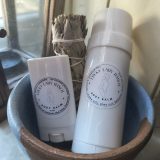 Body BalmUnrefined shea and organic beeswax for hard working skin.
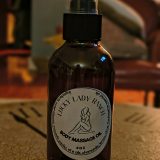 Body OilA silky blend of high quality oils for moisture and massage.
Questions people ask
What is the most important ingredient to avoid in body lotion?
For most people it is synthetic fragrance, listed as fragrance or parfum. It is one of the most common causes of cosmetic skin allergy, and the label does not tell you what is in the blend. Formaldehyde releasing preservatives and methylisothiazolinone come next.
Is it bad if water is the first ingredient in lotion?
No. Water is the base of nearly every lotion and cream. It does mean the product needs a preservative, so it is worth checking which one is used and choosing a product with a gentle, short ingredient list.
Are paraben free lotions always safer?
Not necessarily. Some paraben free lotions use methylisothiazolinone or formaldehyde releasers instead, which are more likely to cause allergic reactions. Look at the whole preservative system, not just the paraben free claim.
Is mineral oil in lotion harmful?
Cosmetic grade mineral oil is highly refined and is considered safe by regulators and most dermatologists. Many people still prefer plant butters and oils because they are renewable and offer fatty acids and natural vitamins that mineral oil lacks.
What can I use instead of body lotion?
A body balm or body oil applied to damp skin after a shower works well for most people. Because they contain no water, they do not need synthetic preservatives, and a small amount covers a lot of skin.
Sources and further reading
- US Food and Drug Administration (FDA), Parabens in Cosmetics
- US Food and Drug Administration (FDA), Fragrances in Cosmetics
- European Commission, Regulation (EC) No 1223/2009 on Cosmetic Products, Annexes III and V
- Scientific Committee on Consumer Safety (SCCS), Opinion on Methylisothiazolinone
- American Contact Dermatitis Society, Contact Allergen Management Program
- Cosmetic Ingredient Review (CIR), safety assessments of formaldehyde releasing preservatives
This guide is for general education and is not medical advice. If you have a skin condition, allergy, or are pregnant or nursing, talk with your doctor or a board certified dermatologist about the products that are right for you.