The Best Carrier Oils for Body Oil and Massage
A practical comparison of carrier oils for body oil and massage: how each one feels, how fast it absorbs, how long it keeps, and who it suits.

Key takeaways
- Light oils like grapeseed and fractionated coconut absorb fast; rich oils like avocado and olive linger and protect.
- For massage, you want glide that lasts, which is why sweet almond and sunflower are classic choices.
- Jojoba keeps far longer than most oils because it is a liquid wax, not a true fat.
- Oils high in delicate fatty acids, such as grapeseed and rosehip, go rancid sooner and should be stored cool and dark.
- Blending two or three oils usually gives a better feel than any single oil alone.
A carrier oil is simply a plant oil used as the base of a body oil, massage oil or essential oil blend. It "carries" everything else onto your skin. Choosing the best carrier oils for body oil comes down to three questions: how should it feel, how fast should it absorb, and how long does it need to last on your shelf?
This guide compares the oils you are most likely to find in natural body care, so you can read a label and know what to expect before you open the bottle.
What makes carrier oils different
Every plant oil is a mix of fatty acids, and that mix shapes how it behaves. Oils rich in oleic acid, like olive and avocado, tend to feel richer and stay on the skin longer. Oils rich in linoleic acid, like grapeseed and sunflower, tend to feel lighter and absorb faster, but they also oxidize more easily. Jojoba is a special case: it is technically a liquid wax that resembles some of the waxes in skin's own oil, which gives it a smooth, nongreasy feel and an unusually long shelf life.
Carrier oil comparison
| Oil | Feel | Absorption | Shelf life | Best for |
|---|---|---|---|---|
| Jojoba | Silky, light | Medium to fast | Long | Daily body oil, sensitive skin, blending with shorter lived oils |
| Sweet almond | Smooth, cushiony | Medium | Medium | Classic massage oil, general body oil |
| Sunflower (high oleic) | Light to medium | Medium | Medium | Budget friendly massage and body oils |
| Grapeseed | Very light, thin | Fast | Short | Quick absorbing oils for warm weather |
| Fractionated coconut | Very light, dry | Fast | Very long | Nonstaining massage, roll on blends |
| Avocado | Rich, thick | Slow | Medium | Very dry skin, mixed in at a smaller share |
| Olive | Rich, slightly tacky | Slow | Medium to long | Rough, weathered skin; soap making |
| Apricot kernel | Light, smooth | Medium to fast | Medium | An alternative to sweet almond |
| Castor | Very thick, sticky | Very slow | Long | Small amounts in blends for cushion and shine |
Shelf life ratings are relative and assume cool, dark storage in a closed bottle. Heat, light and air all shorten them.
Choosing by use
For massage
Massage needs glide that lasts long enough for slow strokes without needing constant reapplication. Sweet almond oil has been the standard for a reason: it has a cushiony slip and does not vanish into skin too quickly. Sunflower and apricot kernel are good alternatives. Very fast absorbing oils like grapeseed feel lovely for a quick application but can run out of slip partway through a longer massage. Our guide to choosing a natural massage oil covers scent, stain and setting.
For an everyday body oil
For daily use after a shower, most people want an oil that softens skin and then gets out of the way so they can dress. Jojoba, or a blend led by jojoba and sweet almond, does this well. Apply it to damp skin and it spreads farther and feels lighter, as explained in how to moisturize after a shower.
For very dry or weathered skin
Here a richer oil earns its place. A blend that includes avocado or olive oil lingers longer and gives rough skin more to work with. If an oil alone is not enough, seal it with a thin layer of balm. See what a beeswax balm does for hard working skin.
For sensitive skin
Fewer ingredients is the guiding idea. A single stable oil such as jojoba, without added essential oils, is a gentle starting point. Some research suggests that olive oil on its own may not be ideal for already compromised skin barriers, so people with eczema prone skin may prefer other oils. A dermatologist can help if you have a specific skin condition.
Why blends usually feel better
Single oils have tradeoffs. Grapeseed is light but short lived; avocado is rich but heavy; castor adds cushion but is sticky alone. Blending lets each oil cover for the others. A common pattern is a light, stable oil as the base (jojoba or sunflower), a richer oil for nourishment (sweet almond or avocado), and a small amount of something special. Vitamin E is often added to slow oxidation, a role we explain in vitamin E in natural body care.
Reading a body oil label
Body oil labels use botanical (INCI) names, which can make a simple product look complicated. A few translations help: Simmondsia chinensis seed oil is jojoba, Prunus amygdalus dulcis oil is sweet almond, Helianthus annuus seed oil is sunflower, Vitis vinifera seed oil is grapeseed, Persea gratissima oil is avocado, and caprylic/capric triglyceride is usually fractionated coconut oil. Ingredients are listed from most to least, so the first one or two oils set the overall feel. Watch for "fragrance" or "parfum" near the end, and for mineral oil (paraffinum liquidum) used as a cheap base. A good body oil can be four or five plant oils and vitamin E, with nothing else needed.
Quality and safety tips
- Smell before you buy, if you can. Fresh oils smell mild, nutty or of almost nothing. A sharp, crayon or paint like smell means rancidity.
- Look for cold pressed or expeller pressed. These are pressed mechanically rather than extracted with chemical solvents.
- Prefer dark glass or opaque bottles. Light speeds up oxidation.
- Mind nut allergies. Sweet almond and apricot kernel oils come from nuts and kernels. If you or a massage partner has a nut allergy, ask a doctor and consider jojoba or sunflower instead.
- Patch test new oils. Apply a little to the inner forearm and wait a day.
- Protect your linens. Plant oils can leave marks that oxidize and yellow on sheets and towels over time. Wash massage linens promptly in warm water.
- Add essential oils carefully. They must be diluted. Our guide to essential oils in body care gives simple ratios.
Our blend
We made our Body Oil as a blend of skin loving plant oils for exactly this reason: no single oil does everything. It works as a daily body oil on damp skin and has enough glide for an unhurried massage. If you want depth on one of the most useful base oils, the main Lucky Lady Ranch site has a full guide to jojoba oil for skin. Plant oils, pressed simply and stored with care, are about as close as chemical free body care gets to its roots.
From the ranch
Made in small batches, without the ingredients discussed above.
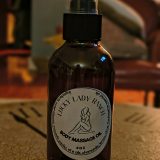 Body OilA silky blend of high quality oils for moisture and massage.
 Beauty OilSeven plant oils for a soft, dewy, healthy looking face.
Questions people ask
What is the best carrier oil for massage?
Sweet almond oil is the classic choice because it has lasting glide without feeling sticky. Sunflower, apricot kernel and jojoba are good options too, especially if nut allergies are a concern with almond.
Which carrier oil absorbs the fastest?
Grapeseed oil and fractionated coconut oil are among the fastest absorbing, with a light, almost dry feel. Jojoba and apricot kernel are also fairly quick. Avocado, olive and castor absorb slowly.
Which carrier oil lasts the longest?
Jojoba and fractionated coconut oil have very long shelf lives because they resist oxidation. Grapeseed and other oils high in linoleic acid go rancid sooner and are best kept cool and dark.
Can I use olive oil as a body oil?
You can. It is rich and works well on rough, weathered skin. Some people find it heavy or slightly tacky, and those with eczema prone skin may prefer a lighter oil such as jojoba or sunflower.
Sources and further reading
- Lin TK, Zhong L, Santiago JL. Anti-Inflammatory and Skin Barrier Repair Effects of Topical Application of Some Plant Oils. International Journal of Molecular Sciences, 2018
- Danby SG et al. Effect of olive and sunflower seed oil on the adult skin barrier: implications for neonatal skin care. Pediatric Dermatology, 2013
- Cosmetic Ingredient Review (CIR), Safety Assessment of Plant Derived Fatty Acid Oils as Used in Cosmetics
- Cosmetic Ingredient Review (CIR), Safety Assessment of Simmondsia Chinensis (Jojoba) Seed Derived Ingredients
This guide is for general education and is not medical advice. If you have a skin condition, allergy, or are pregnant or nursing, talk with your doctor or a board certified dermatologist about the products that are right for you.