Essential Oils in Body Care: Dilution and Safe Use
How essential oils show up in body care products, what dilution levels make sense for each product type, and the label clues that help sensitive skin.

Key takeaways
- In finished body care, essential oils are usually used at low levels; more is not better for skin.
- Leave on products that cover large areas call for gentler dilution than wash off soaps.
- Names like linalool, limonene and citral on a label are natural scent compounds that some people are allergic to.
- Some cold pressed citrus oils can cause sun sensitivity in leave on products.
- Old, oxidized essential oils are more likely to cause allergies, so freshness matters.
Essential oils give natural soaps, balms and body oils their scent, and for many people they are part of the pleasure of switching to chemical free body care. They are also concentrated plant compounds, and the dose makes a big difference. This guide looks at essential oils in body care from a practical angle: what they are doing in the products on your shelf, how much is sensible when you add them yourself, and how to read the clues on a label.
For a complete introduction to essential oils, including their history and specific cautions for pets, the main Lucky Lady Ranch site has a full guide to essential oil benefits, dilution and safety. Here we focus on body care in particular.
Why essential oils are in body care at all
Mostly, for scent. Essential oils are the natural alternative to synthetic fragrance, and unlike "fragrance" or "parfum," they are listed by name, so you know what you are putting on your skin. Some also contribute in small ways: tea tree and lemongrass have shown antibacterial activity in laboratory studies, which is one reason they appear in deodorants. In a body balm or lotion, though, their main role is to make the product pleasant to use. The butters, oils and waxes do the skin care work.
How much is in a finished product?
Well made body care uses essential oils at low concentrations. The right level depends on how the product is used: how much skin it covers, how long it stays on, and whether it is washed off.
| Product type | Typical gentle range | Why |
|---|---|---|
| Face oils and products for sensitive skin | About 0.5 to 1 percent | Thin, reactive skin; daily use |
| Body oil, body balm, lotion | About 1 to 2 percent | Large area, stays on for hours |
| Massage oil (occasional use) | About 1 to 3 percent | Large area, but not daily |
| Small area balm (hands, feet) | Up to about 3 percent | Small area, tougher skin |
| Cold process soap and body wash | Varies; often higher | Rinsed off within a minute |
| Bath soaks | A few drops, dispersed first | Oils float on water and can sting undiluted |
These are general starting points used in aromatherapy and cosmetic formulation, not hard rules. Some oils, such as cinnamon bark and clove, should be used at far lower levels, and some are best avoided on skin altogether.
Adding essential oils to an unscented product
If you like to scent your own body oil or balm, a simple kitchen rule of thumb is that one drop is roughly 0.05 milliliters, so about 20 drops make a milliliter. Drop size varies with the bottle, so treat this as an estimate.
- For a 1 percent blend: about 6 drops per ounce (30 milliliters) of carrier.
- For a 2 percent blend: about 12 drops per ounce.
Mix thoroughly, label the bottle with the date, and patch test on the inner forearm for a day before using it widely. If you are choosing a base oil, see the best carrier oils for body oil. For a bath, essential oils do not mix with water and can sit on the surface in concentrated droplets, so blend them first into a spoonful of carrier oil or into the salts. Our guide to mineral bath salts and clays has more.
Reading the label
Botanical names
Essential oils appear by their Latin plant names, for example Lavandula angustifolia (lavender) oil, Melaleuca alternifolia (tea tree) leaf oil, or Citrus limon (lemon) peel oil. That transparency is one of their advantages over synthetic fragrance.
Linalool, limonene, citral and friends
You may see names like linalool, limonene, geraniol, citral, citronellol or eugenol near the end of a label. These are natural compounds found in many essential oils. EU rules require certain fragrance allergens to be named when they are above set levels, and many makers list them everywhere for transparency. Their presence does not mean synthetic fragrance was added. It is useful information if you already know you react to one of them.
Unscented vs fragrance free
"Fragrance free" generally means no fragrance materials were added. "Unscented" can sometimes mean a masking scent was added to cover the natural smell of the ingredients. If you are very sensitive, read the full ingredient list rather than relying on either term. Our guide to reading body care labels explains other claims like these.
Oils that need extra care
- Cold pressed citrus oils such as bergamot, lime, and expressed lemon or grapefruit can cause phototoxic reactions, meaning redness or darkening when treated skin is exposed to sun. This matters in leave on products used on sun exposed skin. Steam distilled versions and "bergaptene free" bergamot are generally considered much safer in this respect.
- Hot oils like cinnamon bark, clove and oregano are strong skin irritants and belong only at very low levels, if at all.
- Peppermint and eucalyptus are generally not recommended on or near the faces of young children.
- Oxidized oils, especially old citrus, pine and tea tree, are more likely to cause allergic reactions. Oxidation increases the allergenic potential of compounds like limonene and linalool.
Who should be most careful
People with eczema, known fragrance allergies, or very reactive skin may do best with fragrance free body care, at least for leave on products. Babies and young children need much lower concentrations, if any. If you are pregnant or breastfeeding, talk with your doctor or midwife about which oils to use; our guide to gentle body care during pregnancy keeps things simple. Essential oils should never be swallowed or used undiluted on skin.
Keeping essential oils and scented products fresh
Store essential oils tightly capped in dark glass, away from heat and sunlight. Most keep well for a year or two after opening; citrus oils oxidize faster. Scented body care should be kept the same way. If a product's scent turns sharp or sour, it is time to replace it.
How we scent our products
We use only essential oils at Lucky Lady Ranch, never synthetic fragrance, and we keep them at gentle levels suited to each product. Our Body Oil is a good example of a leave on product where restraint matters. In our Body Bar, essential oils give a natural scent that rinses away. A light touch lets the plants do what they do best: make simple care feel like a small pleasure.
From the ranch
Made in small batches, without the ingredients discussed above.
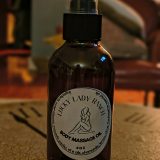 Body OilA silky blend of high quality oils for moisture and massage.
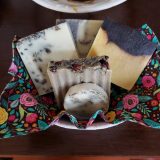 Body BarA true cold process soap for gentle, everyday cleansing.
Questions people ask
How much essential oil should I add to body lotion or body oil?
A gentle range for body products is about 1 to 2 percent, which is roughly 6 to 12 drops per ounce of lotion or oil. Use less for sensitive skin, faces and children, and patch test first.
What does linalool or limonene on a label mean?
They are natural scent compounds found in many essential oils. Some regulations require them to be listed because some people are allergic to them. Their presence does not mean synthetic fragrance was added.
Which essential oils cause sun sensitivity?
Cold pressed citrus oils such as bergamot, lime, and expressed lemon and grapefruit can cause phototoxic reactions on sun exposed skin. Steam distilled citrus and bergaptene free bergamot are generally safer.
Can I put essential oils directly in my bath?
It is better to blend them first into a spoonful of carrier oil or into bath salts. Essential oils do not dissolve in water and undiluted droplets can irritate skin.
Are essential oils safer than synthetic fragrance?
They are fully disclosed and plant derived, which many people prefer. They can still cause irritation and allergies, so they should be used at gentle levels and kept fresh.
Sources and further reading
- Tisserand R, Young R. Essential Oil Safety: A Guide for Health Care Professionals, 2nd edition. Churchill Livingstone, 2014
- European Commission, Regulation (EC) No 1223/2009 on Cosmetic Products, Annex III fragrance allergen labeling
- Scientific Committee on Consumer Safety (SCCS), Opinion on Fragrance Allergens in Cosmetic Products, 2012
- International Fragrance Association (IFRA), IFRA Standards
- National Center for Complementary and Integrative Health (NCCIH), Aromatherapy
This guide is for general education and is not medical advice. If you have a skin condition, allergy, or are pregnant or nursing, talk with your doctor or a board certified dermatologist about the products that are right for you.