Body Care for Sensitive Skin
Sensitive skin does best with fewer products, simpler formulas and patient testing. Here is how to build a gentle body care routine one step at a time.

Key takeaways
- For sensitive skin, fewer products and shorter ingredient lists make reactions easier to avoid and easier to trace.
- Introduce one new product at a time and patch test it for several days first.
- Natural does not mean non irritating: essential oils and botanical extracts can bother some people.
- Laundry, fabrics, water temperature and shaving often matter as much as what is in the bottle.
If new lotions sting, scented soaps make you itch, or your skin seems to react to everything, you probably already know that body care for sensitive skin takes more care than grabbing whatever is on sale. The good news is that sensitive skin often calms down with a simpler approach. This is where chemical free body care, meaning products made without harsh synthetic additives, can help. But even natural ingredients need to be chosen with a bit of thought.
This guide is about the method: how to simplify, how to test, and how to build a routine your skin can trust. For a list of specific irritants, our main site covers common irritants for sensitive skin and eczema in depth.
What "sensitive skin" usually means
Sensitive skin is not a single diagnosis. People use the term for skin that stings, burns, itches, flushes or breaks out in a rash more easily than most. Sometimes there is an underlying condition like eczema or rosacea. Sometimes it is a specific allergy, such as to a fragrance ingredient or a preservative. And sometimes the skin barrier is simply worn down by hot water and harsh cleansers, so everything gets in more easily. Our plain English guide to your skin barrier explains why a damaged barrier makes skin more reactive.
If your reactions are frequent or severe, a dermatologist can help sort out the cause, including patch testing for allergies in the office.
Step one: simplify
The quickest way to calm reactive skin is to use fewer things on it. Every product adds ingredients, and every ingredient is another possible trigger.
- Pare your body routine down to three basics: a gentle cleanser, a moisturizer, and deodorant if you use one.
- Set aside scrubs, scented body sprays, and anything that tingles.
- Choose products with short ingredient lists you can read.
- Give skin two weeks on this simple routine before adding anything back.
Step two: choose gentle formats
| Need | Gentler choices | Why |
|---|---|---|
| Cleansing | Mild bar soap or a gentle wash, used only where needed | Less contact with cleansers means less stripping |
| Moisturizing | Simple balm or plain plant oil | Anhydrous products (no water) usually need no preservative, a common trigger |
| Deodorant | Baking soda free or lightly scented formula | Baking soda and strong scent are common underarm irritants |
| Bath | Plain salts in warm water | Skip bubble baths and heavily scented bombs |
That preservative point is worth understanding. Products that contain water, like lotions, need preservatives to stay safe, and some preservatives, such as methylisothiazolinone, are well known allergens. Our explainer on why lotions need preservatives and balms do not covers this. A simple balm or oil sidesteps the question entirely.
Step three: patch test every new product
A patch test at home will not catch everything, but it catches a lot. Here is a simple method many dermatologists suggest:
- Pick a small area that is easy to watch, like the inner forearm or the bend of the elbow.
- Apply a small amount of the product twice a day.
- Keep going for five to seven days. Some reactions take a few days to appear.
- Watch for redness, itching, bumps or burning.
- If the spot stays calm, try the product on a larger area. If it reacts, wash it off and make a note of the ingredients.
Only test one new product at a time. If you add three at once and react, you will not know which one caused it.
"Natural" is not automatically gentle
Plant ingredients can be wonderful, and they can also cause reactions. A few honest notes:
- Essential oils are fragrance. Lavender, tea tree, citrus and others are common triggers for sensitive people, especially in higher amounts. Read about essential oil dilution and safe use.
- Nut and seed oils like sweet almond may bother people with related allergies.
- Beeswax and propolis are well tolerated by most people, but propolis is a known allergen for some.
- Botanical extracts from plants in the daisy family, such as chamomile and calendula, can trigger reactions in people allergic to that family.
Our guide to reading body care labels helps you find these on an ingredient list. Since every one of our products lists its full ingredients, you can check each one before you buy.
Beyond the bottle: habits that matter
- Water temperature. Warm, not hot. Hot water dries skin and can increase itching.
- Moisturize damp skin. The damp skin method helps support the barrier.
- Laundry. Use a fragrance free detergent, skip dryer sheets and fabric softener, and consider an extra rinse cycle.
- Fabrics. Soft cotton and loose clothing are easier on reactive skin than rough wool or tight synthetics.
- Shaving. Use a sharp blade, shave in the direction of hair growth, and moisturize afterward. Wait before applying deodorant to freshly shaved underarms.
- Sweat. Rinse off after exercise. Dried sweat can sting sensitive skin.
A sample gentle routine
Daily: a short, warm shower with a mild bar used only on underarms, groin and feet. Pat dry, then smooth on a simple oil or balm while skin is damp.
As needed: a plain balm on dry patches, hands and heels. Our shea butter and beeswax Body Balm has a short ingredient list, so it is easy to patch test. Our Body Oil is another simple choice for after the shower.
Weekly: note how skin feels. Add a new product only when everything has been calm for a while.
If your underarms react easily, see our guide to finding a natural deodorant that works for baking soda free options.
When to see a dermatologist
Talk with a doctor or dermatologist if you have a rash that spreads, blisters, oozes or does not improve within a couple of weeks, or if itching disrupts your sleep. Professional patch testing can identify specific allergens, which makes shopping much easier.
Gentle, on purpose
Sensitive skin is not a problem to fight. It is information. With fewer products, careful testing and simple ingredients, most people find a routine that feels calm. That idea, leaving out what your skin does not need, is the heart of everything we make at Lucky Lady Ranch.
From the ranch
Made in small batches, without the ingredients discussed above.
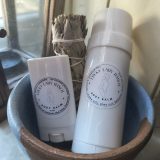 Body BalmUnrefined shea and organic beeswax for hard working skin.
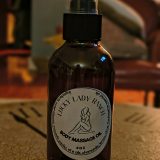 Body OilA silky blend of high quality oils for moisture and massage.
Questions people ask
What is the best body moisturizer for sensitive skin?
Many people with sensitive skin do well with a simple balm or plain plant oil with a short ingredient list and little or no fragrance. Because they contain no water, they usually need no preservative, which removes one common trigger. Patch test any new product first.
How long should I patch test a new body product?
Apply a small amount to the inner forearm twice a day for five to seven days. Some reactions take a few days to show up. If the area stays calm, try a larger area.
Are essential oils safe for sensitive skin?
Some people with sensitive skin tolerate low amounts of essential oils well, while others react. Essential oils are concentrated fragrance compounds, so unscented or lightly scented products are a safer starting point. Patch test before regular use.
Why does my skin itch after a shower?
Hot water, long showers and strong cleansers can dry skin and leave it itchy. Fragranced products and laundry residue can also contribute. Try shorter, warm showers, gentle soap only where needed, and moisturizing damp skin. See a doctor if itching persists.
Sources and further reading
- American Academy of Dermatology (AAD), How to care for sensitive skin
- American Contact Dermatitis Society, Contact allergen information
- National Eczema Association, Skin care and triggers
- US Food and Drug Administration (FDA), Allergens in Cosmetics
This guide is for general education and is not medical advice. If you have a skin condition, allergy, or are pregnant or nursing, talk with your doctor or a board certified dermatologist about the products that are right for you.