Reading Body Care Labels: Front Claims vs Ingredient Lists
The front of a bottle is a sales pitch. The back is information. Here is what common body care claims really promise, and a quick way to check the ingredient list.

Key takeaways
- Front of pack claims such as natural, hypoallergenic and dermatologist tested have no strict legal definition for cosmetics in the US.
- The ingredient list is the real information: in the US it runs from most to least, down to the ingredients at 1 percent or less.
- Unscented and fragrance free do not mean the same thing.
- A star ingredient named on the front may be present in only a tiny amount; check where it sits in the list.
A body lotion bottle has two sides, and they do very different jobs. The front sells. The back informs. Learning the habit of reading body care labels from back to front is one of the most useful skills for anyone moving toward chemical free body care, because the most reassuring words on the package are often the least regulated. This guide decodes the claims you will see most on lotions, washes, deodorants and balms, then gives you a quick check of the ingredient list that takes about a minute.
Why the front and back tell different stories
In the United States, the FDA requires cosmetics to carry an ingredient list, and it regulates against labeling that is false or misleading. But most of the friendly words on the front of a bottle, such as natural, clean, gentle and pure, have no official definition for cosmetics. A brand can use them as long as they are not clearly false. The ingredient list, on the other hand, follows set rules about naming and order. When the two seem to disagree, trust the back.
For a deeper look at how ingredient names work, the main Lucky Lady Ranch site has a full guide on how to read a cosmetic ingredient label. Here we focus on body care claims and the quick checks that matter most for daily products.
Common front claims, decoded
| Claim | What it suggests | What it actually guarantees |
|---|---|---|
| Natural | Made from plants and minerals | Nothing specific. No legal definition for cosmetics in the US. |
| Hypoallergenic | Will not cause allergies | No federal standard. The FDA notes that manufacturers are not required to prove it. |
| Dermatologist tested | Approved by skin doctors | A dermatologist was involved in some test. It does not say what was tested or what the results were. |
| Unscented | No fragrance | No noticeable smell. It may contain a masking fragrance to cover the base odor. |
| Fragrance free | No fragrance | Often means no fragrance was added, but there is no legal definition. A masking ingredient or essential oils may still appear. Check the list. |
| With shea butter / with aloe | Rich in that ingredient | It is in there. It may be a very small amount. |
| Paraben free | Free of concerning preservatives | No parabens. A different preservative will usually be present if the product contains water. |
| Organic | All organic ingredients | Meaningful only with a certification seal, such as USDA Organic, and even then rules depend on the percentage. |
| Clinically proven | Strong scientific backing | Some study was done. The size and design are rarely shared. |
Claims are not always misleading, but they are marketing. Our guide to common natural body care myths unpacks a few more beliefs that labels tend to encourage.
Reading the ingredient list in 60 seconds
You do not need to know every chemical name. A quick scan answers the questions that matter.
- Read the first five ingredients. In the US, ingredients are listed in descending order of amount, so the first few make up most of the product. In a lotion, water is usually first. In a balm or oil, you should see oils, butters and wax.
- Find the star ingredient. If the front says "with shea butter" and shea appears after the preservatives, it is likely a small amount. Ingredients at 1 percent or less may be listed in any order at the end, so position in the last part of the list tells you little except that the amount is small.
- Look for "fragrance" or "parfum". This single word can represent a blend of many compounds that do not have to be listed individually. If your skin is sensitive, this is the first thing to check.
- Spot the preservative. Any product with water needs one. Note which it is so you can track reactions over time. We explain why in why lotions need preservatives and balms do not.
- Check for your personal triggers. Nut oils, lanolin, specific essential oils, or anything you have reacted to before.
Plant names in Latin
Ingredient lists use standardized INCI names, so plant ingredients often appear in Latin. These are not hidden chemicals; they are just formal names. A few you will see often in body care:
- Butyrospermum parkii butter: shea butter
- Theobroma cacao seed butter: cocoa butter
- Simmondsia chinensis seed oil: jojoba oil
- Prunus amygdalus dulcis oil: sweet almond oil
- Cera alba: beeswax
- Maranta arundinacea root powder: arrowroot
- Tocopherol: vitamin E
- Sodium bicarbonate: baking soda
Long Latin lists can look intimidating, but on a balm or oil they are often all plant ingredients. A long list of short chemical names in a lotion is a different story. For specific ingredients many people skip, see body lotion ingredients to avoid.
Label questions by product type
- Body wash: what is the main cleanser? Strong sulfates near the top can be drying for daily use.
- Lotion: how far down are the oils and butters, and what preserves it?
- Deodorant: is there an aluminum compound (that makes it an antiperspirant), and is baking soda high on the list? Our article on aluminum free deodorant ingredients explains each component.
- Balm or body butter: is it truly water free? Is there petrolatum or mineral oil?
- Mineral sunblock: sunscreens are regulated as drugs in the US, so the active ingredient appears in a separate Drug Facts box. Look for zinc oxide there.
What labels cannot tell you
An ingredient list does not show percentages, the quality of an oil, how fresh it is, or how well a product was made. Shorter lists are easier to judge, which is one quiet advantage of simple products. If you are unsure about a product, it is fine to ask the maker directly. A small business should be able to tell you what is in its products and why.
Our labels
We try to make our labels easy to read at a glance. Our All Day Deodorant lists oils, arrowroot, baking soda, clay, charcoal and named essential oils, and our Body Balm has four ingredients. If a label leaves you with questions, that is a reasonable sign to look elsewhere. For the bigger picture, start with what chemical free body care means.
From the ranch
Made in small batches, without the ingredients discussed above.
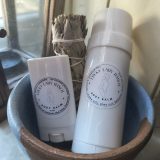 Body BalmUnrefined shea and organic beeswax for hard working skin.
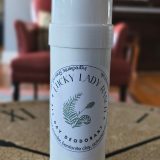 All Day DeodorantAluminum free deodorant that passed every sweaty test we gave it.
Questions people ask
What does hypoallergenic mean on a lotion?
In the US there is no federal standard for the term. It suggests a lower chance of allergic reaction, but manufacturers are not required to prove it, so people with known allergies should still read the full ingredient list and patch test.
What is the difference between unscented and fragrance free?
Unscented usually means the product has no noticeable smell, which can be achieved with a masking fragrance. Fragrance free often means no fragrance was added, but neither term has a legal definition, so always check the ingredient list for fragrance, parfum or essential oils.
Are ingredients listed in order of amount?
Yes, in the US ingredients are listed in descending order of predominance. Ingredients present at 1 percent or less can be listed in any order after those above 1 percent.
Is a long ingredient list always bad?
Not always. Plant based products can have long lists because each oil is listed by its formal name. A long list is harder to judge, though, and it gives more chances for an ingredient your skin dislikes.
What does dermatologist tested mean?
It means a dermatologist was involved in some kind of testing. The phrase does not say how many people were tested, what was measured or what the results showed.
Sources and further reading
- US Food and Drug Administration (FDA), Cosmetics Labeling Guide
- US Food and Drug Administration (FDA), Hypoallergenic Cosmetics
- US Food and Drug Administration (FDA), "Natural" and "Organic" Labeling of Cosmetics
- US Department of Agriculture (USDA), National Organic Program: Cosmetics, Body Care Products, and Personal Care Products
- Personal Care Products Council, International Cosmetic Ingredient Dictionary and Handbook (INCI)
This guide is for general education and is not medical advice. If you have a skin condition, allergy, or are pregnant or nursing, talk with your doctor or a board certified dermatologist about the products that are right for you.