Six Natural Body Care Myths, Checked
Some popular beliefs about natural body care are true, some half true, and some simply wrong. Six common claims, checked calmly against what is actually known.

Key takeaways
- Natural ingredients can still irritate; essential oils and baking soda are common examples.
- The often quoted claim that skin absorbs 60 percent of what you apply is not supported by research; absorption varies widely by ingredient.
- Natural deodorant does not detox your underarms, but an adjustment period is real for many people.
- Natural products do go off, and water based ones always need a preservative.
- A hard to pronounce name is not a reliable warning sign; many plant ingredients have long Latin names.
The move toward simpler, chemical free body care has brought a lot of good habits, and also a lot of slogans. Some get repeated so often that they feel like facts. Honest choices depend on honest information, so this guide checks six common natural body care myths against what is actually known. A few hold up partly, a few fall apart, and all of them have a useful lesson inside.
Myth 1: Natural means it cannot irritate your skin
Verdict: false.
Plants make some of the most potent compounds there are. Essential oils are a clear example. Lavender, tea tree, citrus and cinnamon oils can all cause irritation or allergic reactions for some people, especially when used undiluted or in high concentrations. Some citrus oils can also make skin more sensitive to sunlight. Baking soda, a natural mineral, is a common reason some people react to natural deodorants. Nut oils matter for people with nut allergies, and lanolin and beeswax bother a small number of people too.
What is true: simple products with short ingredient lists make it easier to figure out what your skin tolerates. Natural is not a guarantee of gentle, but fewer ingredients means fewer suspects. Our guide to essential oils in body care covers sensible dilution and patch testing.
Myth 2: Your skin absorbs 60 percent of what you put on it
Verdict: not supported.
This number circulates widely, but there is no reliable research behind a single absorption figure. How much of a substance passes through skin depends on the molecule's size and chemistry, the product it is in, where on the body it is applied, how long it stays on, and the condition of your skin. Some molecules pass through in tiny amounts, many barely at all, and a few more readily. The FDA has studied absorption of certain sunscreen filters into the bloodstream, which shows absorption is real for some ingredients, but those findings are specific to those ingredients, not a general rule.
What is true: skin is a good but imperfect barrier, so it is reasonable to think about products that sit on large areas of skin for hours. The main Lucky Lady Ranch site explains the science in more depth in does your skin absorb what you put on it. For how the barrier works, see your skin barrier, explained.
Myth 3: Switching to natural deodorant "detoxes" your armpits
Verdict: the detox part is false; the adjustment period is real.
Your liver and kidneys handle detoxification. Sweat glands are mainly for cooling, and there is no good evidence that your underarms store toxins that need to be released. But many people do notice more sweat and odor for a week or a few weeks after stopping an antiperspirant. A likely explanation is simpler: aluminum salts temporarily plug sweat ducts, and when you stop, sweat returns to its normal amount. The mix of odor causing bacteria in the underarm may also shift for a while.
What is true: patience usually pays off. If a deodorant still causes redness or itching after the first week or two, the formula itself may not suit you. See finding a natural deodorant that works for you.
Myth 4: Natural products never go bad
Verdict: false.
Plant oils and butters go rancid over time, especially in heat and light. Anything containing water can grow bacteria and mold. That is why any lotion, natural or not, needs a preservative, and why water free balms and oils are popular with natural makers. We explain the difference in why lotions need preservatives and balms do not.
What is true: well made, water free products stored in a cool, dark place usually keep for a long time. Our guide to storing natural body care covers the signs that something has turned.
Myth 5: If you cannot pronounce an ingredient, avoid it
Verdict: a poor rule of thumb.
Ingredient lists use standardized INCI names, and plant ingredients are listed by their Latin names. Butyrospermum parkii is shea butter. Cera alba is beeswax. Tocopherol is vitamin E. Meanwhile, some easy to read words, like "fragrance," can hide a long list of undisclosed compounds.
What is true: it is fair to want to understand what you use. The better rule is: if you do not know what an ingredient is, look it up or ask the maker. Our guide to reading body care labels shows how.
Myth 6: Oils will make your body greasy and clog your pores
Verdict: partly true, depending on the oil and the amount.
Most body oil complaints come from using too much on dry skin. A few drops per limb on damp skin absorbs quickly for most people. That said, some oils and butters feel heavier, and people prone to breakouts on the chest or back may find that rich oils, coconut oil in particular, do not suit those areas. Skin varies, and so do oils.
What is true: choose lighter oils for oily or breakout prone areas, use less, and apply to damp skin. Our comparison of lotion, body balm and body oil helps you match the format to your skin.
Quick summary
| Myth | Verdict | The useful takeaway |
|---|---|---|
| Natural cannot irritate | False | Patch test, and prefer short ingredient lists |
| Skin absorbs 60 percent | Not supported | Absorption depends on the ingredient |
| Deodorant detox | Detox false, adjustment real | Give a new deodorant a fair trial |
| Natural never goes bad | False | Store cool, dark and dry |
| Cannot pronounce, avoid | Poor rule | Look it up or ask the maker |
| Oils clog and grease | Partly true | Use less, on damp skin, and pick the right oil |
Why honesty matters here
We make natural body care at Lucky Lady Ranch, and we would rather you choose it for real reasons: short, understandable ingredient lists, no harsh detergents or fragrance blends, and products that feel good to use. Our All Day Deodorant and Body Oil are made with that in mind, and neither comes with miracle claims. If you have a skin condition or a reaction that does not settle, a doctor or dermatologist is the right next step.
From the ranch
Made in small batches, without the ingredients discussed above.
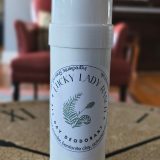 All Day DeodorantAluminum free deodorant that passed every sweaty test we gave it.
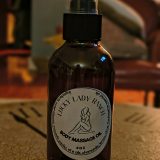 Body OilA silky blend of high quality oils for moisture and massage.
Questions people ask
Does skin really absorb 60 percent of what you put on it?
There is no reliable research supporting a single figure like 60 percent. Absorption varies widely depending on the ingredient, the product, the body area, how long it stays on and the condition of the skin.
Is there really a detox period with natural deodorant?
Many people notice more sweat or odor for a week or a few weeks after stopping antiperspirant, but this is likely sweat ducts returning to normal and bacteria adjusting, not a release of toxins.
Can natural skin care products cause allergic reactions?
Yes. Essential oils, plant extracts, nut oils, beeswax and lanolin can all cause reactions in some people. Patch testing a new product on the inner forearm is a sensible precaution.
Do natural body care products expire?
Yes. Oils and butters can go rancid, and products containing water can grow microbes. Water free balms and oils stored in a cool, dark place usually last longest. Replace anything that smells stale or looks different.
Sources and further reading
- US Food and Drug Administration (FDA), Fragrances in Cosmetics
- Matta M.K. et al., Effect of Sunscreen Application on Plasma Concentration of Sunscreen Active Ingredients, JAMA (2020)
- American Academy of Dermatology, Contact Dermatitis Overview
- Callewaert C. et al., Deodorants and Antiperspirants Affect the Axillary Bacterial Community, Archives of Dermatological Research (2014)
- US Food and Drug Administration (FDA), Microbiological Safety and Cosmetics
This guide is for general education and is not medical advice. If you have a skin condition, allergy, or are pregnant or nursing, talk with your doctor or a board certified dermatologist about the products that are right for you.