What Is Chemical Free Body Care?
Everything is made of chemicals, so what does chemical free body care actually mean? A plain definition, a short list of what to leave out, and how to begin.

Key takeaways
- Everything, including water and shea butter, is a chemical, so the phrase is shorthand rather than a literal promise.
- In practice, chemical free body care means products made without harsh synthetic additives such as hidden fragrance blends, strong detergents and petroleum fillers.
- Short ingredient lists you can read and understand are the most useful sign to look for.
- Start with the products that cover the most skin for the most hours: lotion, body wash and deodorant.
If you have ever turned a lotion bottle around and found a paragraph of ingredients you could not pronounce, you already understand why people go looking for chemical free body care. The phrase is everywhere now, on labels, in shop windows and in search results. It is also, taken literally, impossible. Water is a chemical. So is the oleic acid in olive oil and the stearic acid in shea butter. This guide explains what the phrase honestly means, what it is a reasonable shorthand for, and how to use the idea to make calmer, simpler choices for the skin you live in.
A plain definition
When we say chemical free body care on this site, we mean products for the body (from the neck down) that are made without harsh synthetic additives. That usually means a short list of recognizable ingredients: plant oils and butters, beeswax, clays, mineral salts, plant starches and, where scent is used, essential oils listed by name.
It does not mean a product is free of chemistry. Soap itself is made by a chemical reaction between oils and lye. Zinc oxide is a mineral compound. Vitamin E is a molecule with a long name. The useful distinction is not natural versus chemical. It is gentle, understandable and necessary versus harsh, hidden or included mostly for cost and shelf appeal.
What it usually leaves out
There is no legal definition of "chemical free" in the United States, so brands use it differently. Here is the working list most careful shoppers mean, and the one we use when we write about body care:
- Undisclosed fragrance blends. A single word, "fragrance" or "parfum," can stand in for many separate compounds. People with sensitive skin often react to fragrance, and the label does not tell you which ingredient is the problem.
- Harsh detergents. Strong sulfate cleansers in body washes can leave skin feeling tight and dry, especially with daily use and hot water.
- Petroleum fillers. Mineral oil and petrolatum are not acutely dangerous, and dermatologists do use them, but many people would rather get a protective layer from plant butters and beeswax.
- Preservatives with allergy or contamination concerns. Some, like formaldehyde releasers and methylisothiazolinone, are well documented skin allergens.
- Aluminum salts in antiperspirant. Not because the evidence shows harm, but because many people simply prefer a deodorant that lets the body sweat.
- Synthetic dyes and glitter. Color adds nothing for skin.
You can read more about why each of these ends up on avoid lists in our guide to body lotion ingredients to avoid.
Hazard is not the same as risk
Being honest about chemistry also means being honest about evidence. A substance can be a hazard in a lab study at high doses and still pose little real risk at the tiny amounts found in a cosmetic. Regulators in the US and Europe consider many common ingredients safe within set limits. Choosing chemical free body care is often less about fear of a single ingredient and more about lowering your total load of things your skin does not need, and making labels easier to read.
That said, "natural" is not automatically gentle. Essential oils can irritate if they are too strong. Baking soda in deodorant bothers some underarms. Nut oils matter for people with nut allergies. A good natural product is still formulated with care, and our article on common natural body care myths walks through a few of these misunderstandings.
What a chemical free body care shelf looks like
You do not need a dozen products. Most people can cover daily needs with five or six simple items. Here is how a conventional shelf compares with a simpler one:
| Need | Typical conventional product | Simpler alternative |
|---|---|---|
| Cleansing | Sulfate body wash with added fragrance | Cold process soap bar made from plant oils |
| Daily moisture | Water based lotion with emulsifiers and preservatives | Body oil on damp skin, or a whipped butter |
| Very dry spots | Petrolatum ointment | Beeswax and shea balm |
| Underarms | Aluminum antiperspirant | Aluminum free deodorant with arrowroot and clay |
| Lips | Flavored balm with dyes | Plain beeswax lip balm |
| Outdoor days | Chemical UV filter lotion | Zinc oxide mineral sunblock |
The choice between lotion, balm and oil is personal and depends on your skin and climate. Our comparison of lotion vs body balm vs body oil covers the differences in detail.
Why water free products come up so often
You will notice that many natural body care makers lean toward balms, oils, butters and bars rather than lotions. There is a practical reason. Anything containing water can grow bacteria and mold, so it needs a reliable preservative. Products made only from oils, butters and waxes give microbes far less to work with, so they can often be made without added preservatives. We explain the full picture in why lotions need preservatives and balms do not.
How to start without throwing everything out
Switching does not have to be expensive or sudden. A gentle approach works well:
- Finish what you have, unless something is clearly irritating you.
- Replace the biggest coverage products first. Body lotion and body wash touch most of your skin every day. Deodorant sits on thin skin for many hours.
- Read the ingredient list, not the front of the bottle. Our guide to reading body care labels shows what to look for.
- Change one product at a time, and give each a week or two so you can tell how your skin responds.
- Patch test anything new on the inner forearm, especially if you have sensitive skin.
If you want a simple framework for the day, our simple chemical free body care routine lays out a morning and evening rhythm that takes only a few minutes.
Signs of a thoughtfully made product
- An ingredient list short enough to read in one breath.
- Scent from named essential oils, or no scent at all.
- Oils and butters near the top of the list rather than water and fillers.
- Honest, modest claims: "softens" and "helps protect," not "cures" or "detoxes."
- Clear guidance on storage and how long the product keeps.
Our view
At Lucky Lady Ranch we make small batches of body care in our own kitchen, and the guiding idea is simple: what you leave out matters as much as what you put in. A balm like our shea butter and beeswax Body Balm has four ingredients you can picture. Our cold process Body Bar is made from plant oils and essential oils. Neither is magic, and neither replaces advice from a dermatologist if you have a skin condition. They are simply honest products for everyday skin, and that is what chemical free body care, done well, should feel like.
If you would like a broader view of how this idea fits into beauty and skin care generally, the main Lucky Lady Ranch site has a plain English guide to what clean beauty means.
From the ranch
Made in small batches, without the ingredients discussed above.
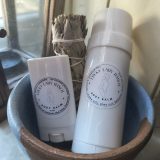 Body BalmUnrefined shea and organic beeswax for hard working skin.
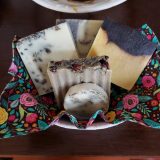 Body BarA true cold process soap for gentle, everyday cleansing.
Questions people ask
Is chemical free body care actually chemical free?
No. Everything, including water and plant oils, is made of chemicals. The phrase is shorthand for body care made without harsh synthetic additives such as undisclosed fragrance, strong detergents, petroleum fillers and preservatives with known allergy concerns.
Is natural body care safer than conventional body care?
Not automatically. Many conventional ingredients are considered safe at the levels used, and some natural ingredients, such as strong essential oils, can irritate. Natural products tend to have shorter, easier to read labels, which makes it simpler to avoid the things your own skin does not tolerate.
What is the first product I should switch?
Start with whatever covers the most skin for the longest time, usually body lotion or body wash. Deodorant is another common first switch. Change one product at a time so you can tell how your skin responds.
Does chemical free body care work as well as regular lotion?
For most people, plant oils, butters and beeswax moisturize very well, especially when applied to damp skin. The texture is different from a light lotion, so it can take a week or two to find the product and amount that suits you.
Sources and further reading
- US Food and Drug Administration (FDA), Cosmetics: "Natural" and "Organic" Labeling
- US Food and Drug Administration (FDA), Fragrances in Cosmetics
- American Academy of Dermatology, Dry Skin: Tips for Managing
- European Commission, Cosmetic Ingredient Database (CosIng)
This guide is for general education and is not medical advice. If you have a skin condition, allergy, or are pregnant or nursing, talk with your doctor or a board certified dermatologist about the products that are right for you.