Why Lotions Need Preservatives and Balms Do Not
Water is the dividing line. Here is why any lotion needs a working preservative, why oils and balms usually do not, and how to read a preservative free claim.

Key takeaways
- Bacteria, yeast and mold need water to grow, so any product made with water needs a working preservative.
- Balms, butters and body oils contain no water, which gives microbes very little to live on.
- Vitamin E slows oils from going rancid but does not stop microbes; it is an antioxidant, not a preservative.
- A water based lotion labeled preservative free deserves a careful second look.
If you have started reading labels, you may have noticed a pattern. Lotions and creams nearly always list one or more preservatives, while many natural balms, butters and body oils list none. That is not because balm makers are braver, or lotion makers are careless. The difference comes down to a single ingredient: water. Understanding why lotions need preservatives helps you make sense of labels, judge marketing claims and choose chemical free body care that is both gentle and safe to use.
Water is what microbes need
Bacteria, yeast and mold are everywhere: on our hands, in the air, in bathrooms. To grow, they need available water. A lotion is usually mostly water, mixed with oils, emulsifiers and nutrients such as plant extracts, sugars and proteins. To a microbe, that is a comfortable home with a full pantry.
Every time you open a jar or pump a bottle, a few microbes can get in. Without a preservative, they can multiply over days or weeks. Sometimes you see it (spots, a change in color, separation, an off smell). Often you do not, at least not right away. Contaminated cosmetics can cause skin infections, and they are a particular concern near eyes, on broken skin, or for people with weakened immune systems. The FDA has issued recalls of cosmetic products over microbial contamination, which is one reason preservatives exist at all.
Why balms and oils are different
A balm is made from oils, butters and wax. A body oil is just oils. Neither contains water, so formulators call them anhydrous, meaning without water. Microbes that land in a pure oil or balm do not have the water they need to multiply, so these products are far less hospitable to them.
That is why a simple shea and beeswax balm can be made safely with four ingredients and no added preservative. It is also why we, like many small makers, lean toward balms, oils and bars rather than lotions. You can read more about how these formats compare in lotion vs body balm vs body oil.
The important exception: water you add
Anhydrous does not mean indestructible. If you dip wet fingers into a balm, or let shower water drip into an open jar of body butter, you introduce water and microbes together. Small pockets of water can let mold get a foothold. Keep lids on, use dry hands or a small spatula, and store jars away from the shower spray. Our guide to storing natural body care covers this in detail.
Rancidity is a separate problem
Oils and butters do not usually spoil from microbes, but they can go rancid. Oxygen, light and heat slowly break down the fats, producing a stale, crayon or paint like smell. Rancid oil is not something you want on your skin, and it can irritate.
This is where vitamin E comes in. Tocopherol is an antioxidant: it slows the oxidation of oils. It is not a preservative and does nothing to stop bacteria or mold. When a balm lists vitamin E, it is protecting the oils from going stale, which is useful, but it is a different job. Our ingredient guide to vitamin E in natural body care explains more.
| Problem | Caused by | Affects | Prevented by |
|---|---|---|---|
| Microbial growth | Bacteria, yeast, mold | Water based products (lotions, creams, body washes) | A broad spectrum preservative and clean handling |
| Rancidity | Oxygen, light, heat | Oils, butters, balms | Antioxidants like vitamin E, cool dark storage, using within its shelf life |
What preservatives lotions commonly use
Lotion preservatives vary widely in how people feel about them. A few common groups:
- Parabens. Long used and effective at low levels. Regulators in the US and EU consider the common ones safe within set limits, though some people avoid them over hormone related questions.
- Phenoxyethanol. Very common in products labeled paraben free. Generally well tolerated at the levels allowed, though some people react to it. The main Lucky Lady Ranch site has a closer look at phenoxyethanol in skin care.
- Formaldehyde releasers such as DMDM hydantoin. These slowly release small amounts of formaldehyde and are known skin allergens for some people.
- Isothiazolinones such as methylisothiazolinone. Effective, but a well documented cause of contact allergy, and now restricted in leave on products in the EU.
- "Natural" or food grade systems such as sodium benzoate and potassium sorbate. These can work, but usually only within a narrow, mildly acidic pH range, and often need to be combined to cover bacteria, yeast and mold.
Which preservatives to avoid is a personal judgment. For a broader list, see our guide to body lotion ingredients to avoid.
How to judge a "preservative free" claim
When you see a preservative free label, ask a few questions:
- Does it contain water? Look for water, aqua, aloe juice, hydrosols or floral waters in the ingredient list. If yes, the product needs some protection.
- Is there another explanation? Single use packets, airless pumps, very high alcohol content or refrigerated products with short use by dates can lower the risk. Some brands also call ingredients "natural antimicrobials" that do have a preserving effect.
- Is the shelf life short and clearly stated? A responsible water based product without a conventional preservative should be honest about how quickly to use it.
- Is it anhydrous? Balms, butters, oils, solid bars and powders genuinely may not need a preservative at all.
Grapefruit seed extract and rosemary extract are sometimes presented as preservatives. Rosemary extract is mainly an antioxidant. Grapefruit seed extract has been studied, and some commercial samples were found to contain synthetic preservatives, so it is not a reliable stand alone answer.
Homemade lotion: a caution
If you make body care at home, a whipped butter or balm is a safer project than a lotion. A homemade lotion made with water and no effective preservative can grow microbes within days, even in the refrigerator. If you want something light and creamy without water, try whipping shea butter with a liquid oil instead.
Why we choose water free
At Lucky Lady Ranch, nearly everything we make for the body is anhydrous: our shea butter and beeswax Body Balm, our oils and our lip balm. It lets us keep ingredient lists short without compromise on safety. That does not make every lotion a bad choice. A well preserved lotion is far safer than a poorly preserved one. It simply means that if you prefer short labels, water free formats are the most direct way to get there. For the bigger picture, start with what chemical free body care really means.
From the ranch
Made in small batches, without the ingredients discussed above.
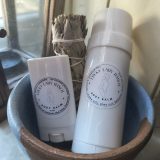 Body BalmUnrefined shea and organic beeswax for hard working skin.
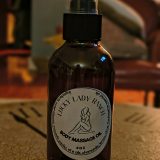 Body OilA silky blend of high quality oils for moisture and massage.
Questions people ask
Do all lotions need preservatives?
Any lotion that contains water needs some way to prevent microbial growth, usually a broad spectrum preservative. Exceptions are rare, such as single use packaging or products with a short, clearly stated refrigerated shelf life.
Do body balms need preservatives?
Balms made only from oils, butters and wax contain no water, so they usually do not need a preservative. They can still go rancid over time, and water introduced by wet fingers can allow mold, so store them dry and closed.
Is vitamin E a natural preservative?
No. Vitamin E is an antioxidant that slows oils from going rancid. It does not stop bacteria, yeast or mold, so it cannot preserve a water based lotion on its own.
How can I tell if my lotion has gone bad?
Look for a change in smell, color or texture, separation that does not mix back, or visible spots. If anything seems off, throw it out. Products past their stated period after opening are best replaced.
Sources and further reading
- US Food and Drug Administration (FDA), Microbiological Safety and Cosmetics
- European Commission, Scientific Committee on Consumer Safety (SCCS), Opinion on Methylisothiazolinone
- Cosmetic Ingredient Review (CIR), Safety Assessment of Parabens as Used in Cosmetics
- von Woedtke T. et al., Aspects of the Antimicrobial Efficacy of Grapefruit Seed Extract and Its Relation to Preservative Substances Contained, Die Pharmazie (1999)
This guide is for general education and is not medical advice. If you have a skin condition, allergy, or are pregnant or nursing, talk with your doctor or a board certified dermatologist about the products that are right for you.